- Shrikrupa Soc Rees, Khalapur, Panvel-II Raigad Raigarh MH 410206 IN
- gethonoraryphd@gmail.com

Phone Number
+91-8655502244
+91-7893528657
Email Address
gethonoraryphd@gmail.com
+91-8655502244
+91-7893528657
gethonoraryphd@gmail.com


 by PhD Duniya
A PhD program is one of the most talked-about and most misunderstood academic paths out there. Some people think it's just "more school." Others assume it's only for people who want to become professors. Neither is quite right.
A doctor of philosophy program is a research-focused doctoral degree, the highest academic qualification most fields offer, built around producing original, publishable research rather than simply absorbing existing knowledge. This guide walks through what a PhD actually involves from PhD admission requirements and PhD duration to the range of PhD specializations available, whether an online PhD program is a realistic option, and how a PhD stacks up against a Master's, an MPhil, and a DBA.
At its core, a PhD program trains a candidate to become an independent researcher. Rather than following a fixed syllabus like an undergraduate or master's degree, PhD candidates work under the supervision of an advisor (or a small committee) to design and carry out original research that contributes new knowledge to their field.
Most PhD programs share the same broad shape:
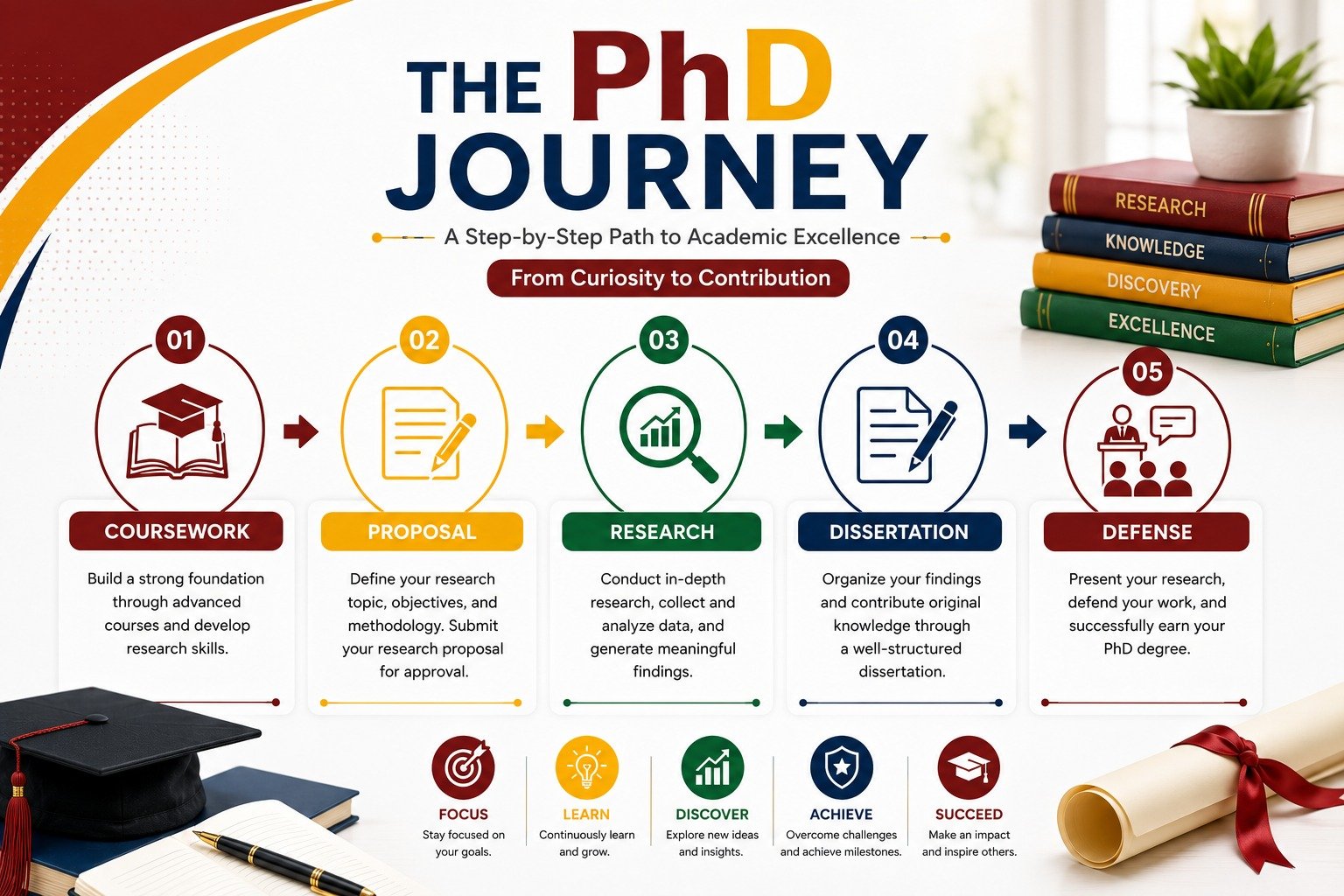
By the end, a graduate earns the title "Dr." and is expected to be capable of independent, publishable scholarship in their field.
PhD admission is typically more selective and more personalized than admission to a taught degree, because programs are essentially matching a candidate to a supervisor and a research gap, not just filling a seat in a classroom. Common requirements include:
Because a supervisor essentially agrees to mentor a candidate for several years, finding the right fit someone actively researching in your intended area, often matters more for admission than a strong GPA alone.
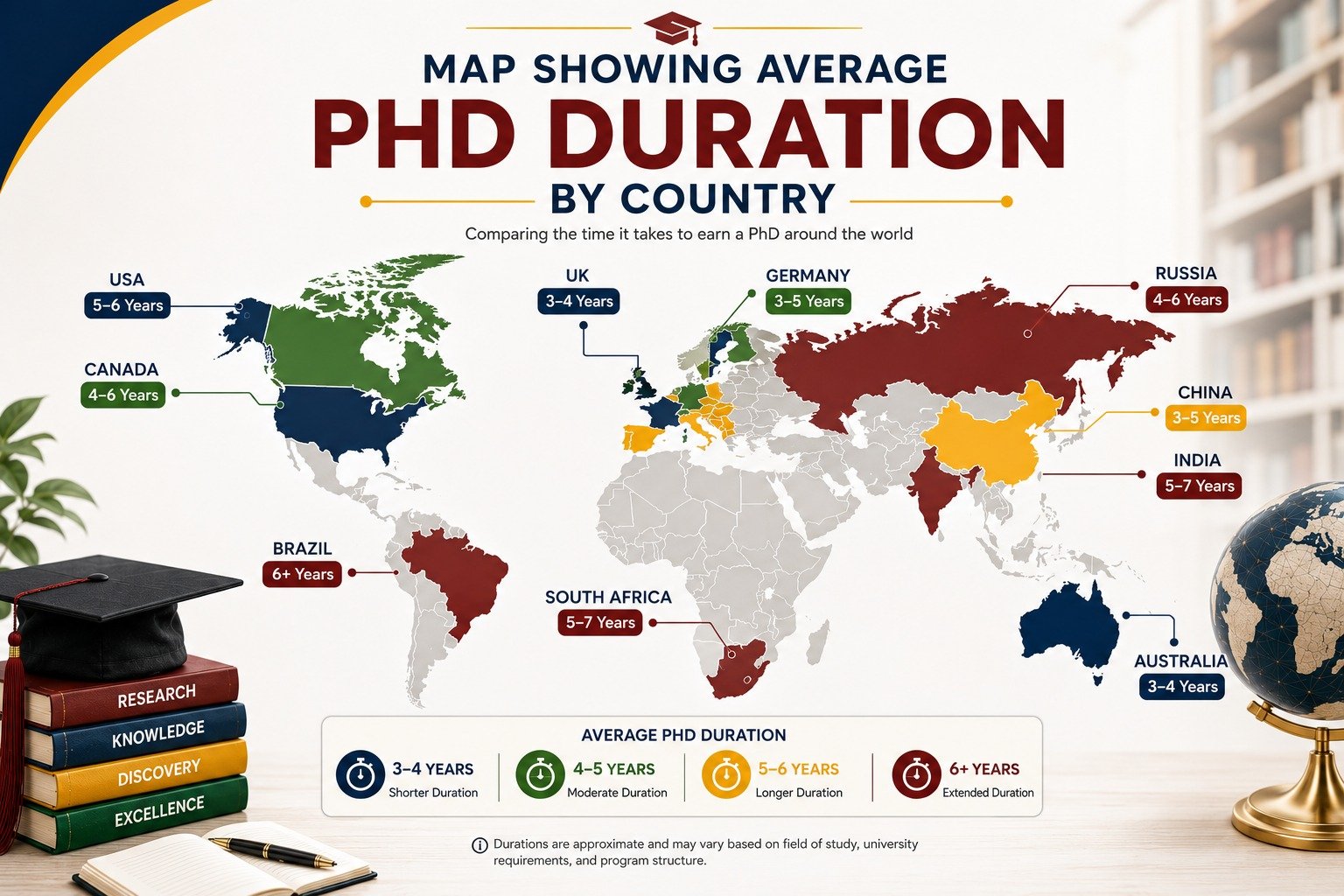
PhD duration varies significantly by country, field, and enrollment mode:
Actual duration also depends heavily on the discipline; lab-based sciences with long experimental cycles often run longer than some humanities or social science PhDs, and funding availability can extend or compress a timeline considerably.
Is an Online PhD Program a Real Option?
An online PhD program has become far more viable in the last several years, particularly for professional and applied doctorates where candidates are already working and researching within their own organizations. Fully online formats tend to work best when:
Traditional, fully residential PhDs in lab-based sciences are less commonly offered online, since access to physical labs, specialized equipment, and in-person research teams is often central to the work. Professionals comparing formats often use research and comparison platforms. Phdduniya is one such resource people use to compare programs and admission requirements before applying to check accreditation and outcomes before committing.
A PhD is built around advancing theoretical and academic knowledge in a field. A DBA (Doctor of Business Administration) takes a more applied path using doctoral research methods to solve real problems inside a candidate's own organization, aimed at working executives rather than aspiring academics.
PhD vs Master's
Feature | PhD | Master's |
Focus | Original research, new contribution to field | Advanced coursework, applied knowledge |
Duration | 3–6 years (varies by country) | 1–2 years |
Output | Dissertation/thesis + defense | Coursework, sometimes a shorter thesis |
Career Direction | Academia, research roles, specialist leadership | Career advancement, specialized skills |
Supervision | Ongoing 1:1 supervisor relationship | Structured taught curriculum |
A master's degree deepens knowledge and skills within an existing field. A PhD goes further, requiring the candidate to generate genuinely new knowledge, not just master existing material.
PhD vs MPhil
Feature | PhD | MPhil |
Level | Doctoral (highest) | Postgraduate research degree, below PhD |
Research Depth | Original, substantial contribution to the field | Research training, smaller-scale study |
Duration | 3–6 years | Typically 1–2 years |
Outcome | Can be used as a standalone terminal degree | Sometimes a stepping stone toward a PhD, sometimes a standalone qualification |
Title Earned | "Dr." | No doctoral title |
Feature | Full-Time PhD | Part-Time PhD |
Duration | 3–5 years | 6–8 years |
Time Commitment | Primary occupation | Alongside work/other commitments |
Funding | More commonly funded (studentships, stipends) | Less commonly funded; often self-funded |
Pace of Research | Continuous, immersive | Slower, spread across other responsibilities |
Best For | Candidates able to dedicate full attention to research | Working professionals, career-changers |
A PhD program is, at its heart, a research apprenticeship: years spent learning to generate genuinely new knowledge in a field, supervised by someone already doing that work. Whether you're weighing PhD admission requirements, trying to figure out realistic PhD duration for your situation, exploring PhD specializations, or deciding between a full-time and part-time (or even online) format, the right choice comes down to your career goals, your discipline, and how much time you can realistically dedicate to the work.
If you're comparing programs, take the time to look at supervisor fit, accreditation, and funding, not just the headline degree title, before applying.
What is a PhD program?
A PhD (Doctor of Philosophy) program is a research-focused doctoral degree in which a candidate conducts original research under supervision, culminating in a dissertation and an oral defense.
What are the typical PhD admission requirements?
Most programs require a relevant master's degree (or strong bachelor's in some systems), a research proposal, academic references, and sometimes an interview with a prospective supervisor.
How long does a PhD take?
PhD duration typically ranges from 3 to 4 years (UK-style, full-time) to 4 to 4.6 years (US-style, including coursework), with part-time study often taking 6–8 years.
Can you complete an online PhD program?
Yes, particularly for professional and applied doctorates. Fully online options are more limited in lab-based sciences that require physical research facilities.
What PhD specializations are available?
PhD specializations span the sciences, engineering, business, social sciences, humanities, health sciences, and education essentially any field with active academic research.