- Shrikrupa Soc Rees, Khalapur, Panvel-II Raigad Raigarh MH 410206 IN
- gethonoraryphd@gmail.com

Phone Number
+91-8655502244
+91-7893528657
Email Address
gethonoraryphd@gmail.com
+91-8655502244
+91-7893528657
gethonoraryphd@gmail.com


 by PhD Duniya
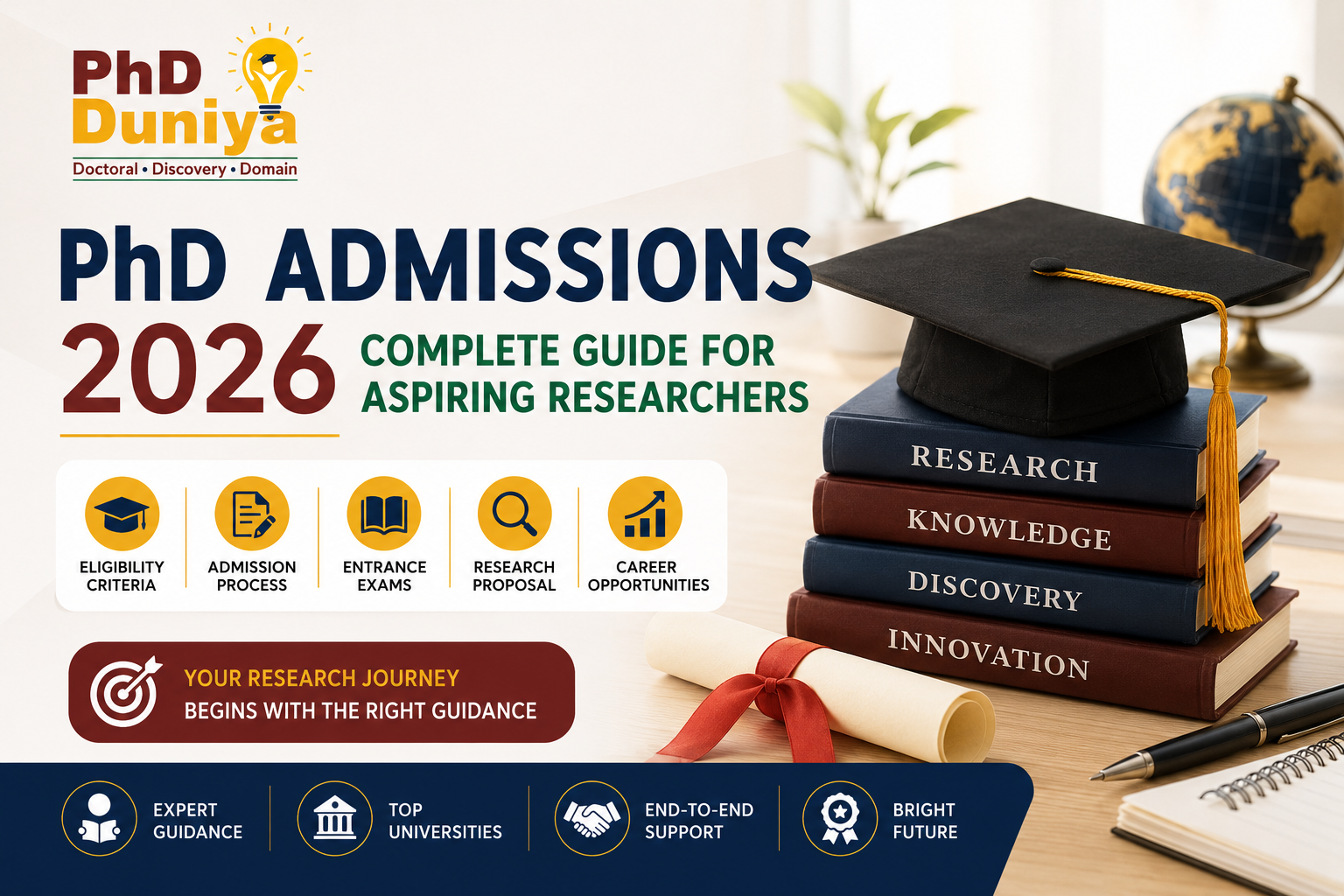
A Doctor of Philosophy (PhD) is the highest academic qualification awarded by universities across the world. It represents advanced research, critical thinking, innovation, and expertise in a specialized field. Whether you aspire to become a researcher, professor, scientist, academician, policy expert, or industry leader, pursuing a PhD can open the door to exceptional career opportunities.
The PhD admission process varies across universities, but it generally includes meeting eligibility criteria, submitting an application, preparing a research proposal, and participating in entrance examinations and interviews where required. Many universities now use national eligibility tests such as UGC-NET/JRF, CSIR-NET, GATE, or institution-specific admission procedures.
This comprehensive guide covers everything you need to know about PhD Admissions in 2026, from eligibility and admission procedures to career prospects and frequently asked questions.
A Doctor of Philosophy (PhD) is a research-focused doctoral degree awarded to candidates who make an original contribution to knowledge through independent research.
Unlike undergraduate or postgraduate programs, a PhD emphasizes:
A PhD prepares scholars to become experts in their chosen discipline.
There are several reasons why students and professionals choose to pursue a PhD.
A PhD develops advanced research skills and subject expertise.
Many universities and research institutions require a PhD for faculty and senior research positions.
Researchers contribute to scientific, technological, business, healthcare, and social innovations.
A doctoral qualification enhances professional credibility and academic standing.
A PhD develops analytical thinking, problem-solving, communication, and leadership skills.
Eligibility requirements differ among universities, but most institutions generally require:
Many institutions also accept candidates who qualify through national-level examinations such as UGC-NET/JRF, CSIR-NET, GATE, or other approved tests, depending on the university's regulations.
Although procedures vary, the admission process generally follows these steps:
Select a subject aligned with your academic background and career goals.
Evaluate universities based on:
Review the university's admission criteria carefully.
Common documents include:
Complete the online or offline application before the deadline.
Some universities conduct entrance examinations, while others admit candidates based on national eligibility tests or exempt eligible candidates under specific regulations. Policies differ by institution.
Shortlisted candidates may attend an interview or research presentation before final selection.
Prepare the following documents:
A strong research topic should:
Students can pursue PhDs in numerous fields, including:
Successful researchers develop skills such as:
Gain expertise in a specialized subject.
Conduct meaningful research that contributes to your field.
Qualify for academic, research, consulting, and leadership positions.
A PhD can enhance opportunities for collaboration and employment in universities, research organizations, and multinational companies.
Become recognized as an expert in your discipline.
Many doctoral graduates qualify for senior academic, research, consulting, and management roles.
PhD graduates may pursue careers as:
Students may face:
Careful planning and consistent communication with supervisors can help address these challenges.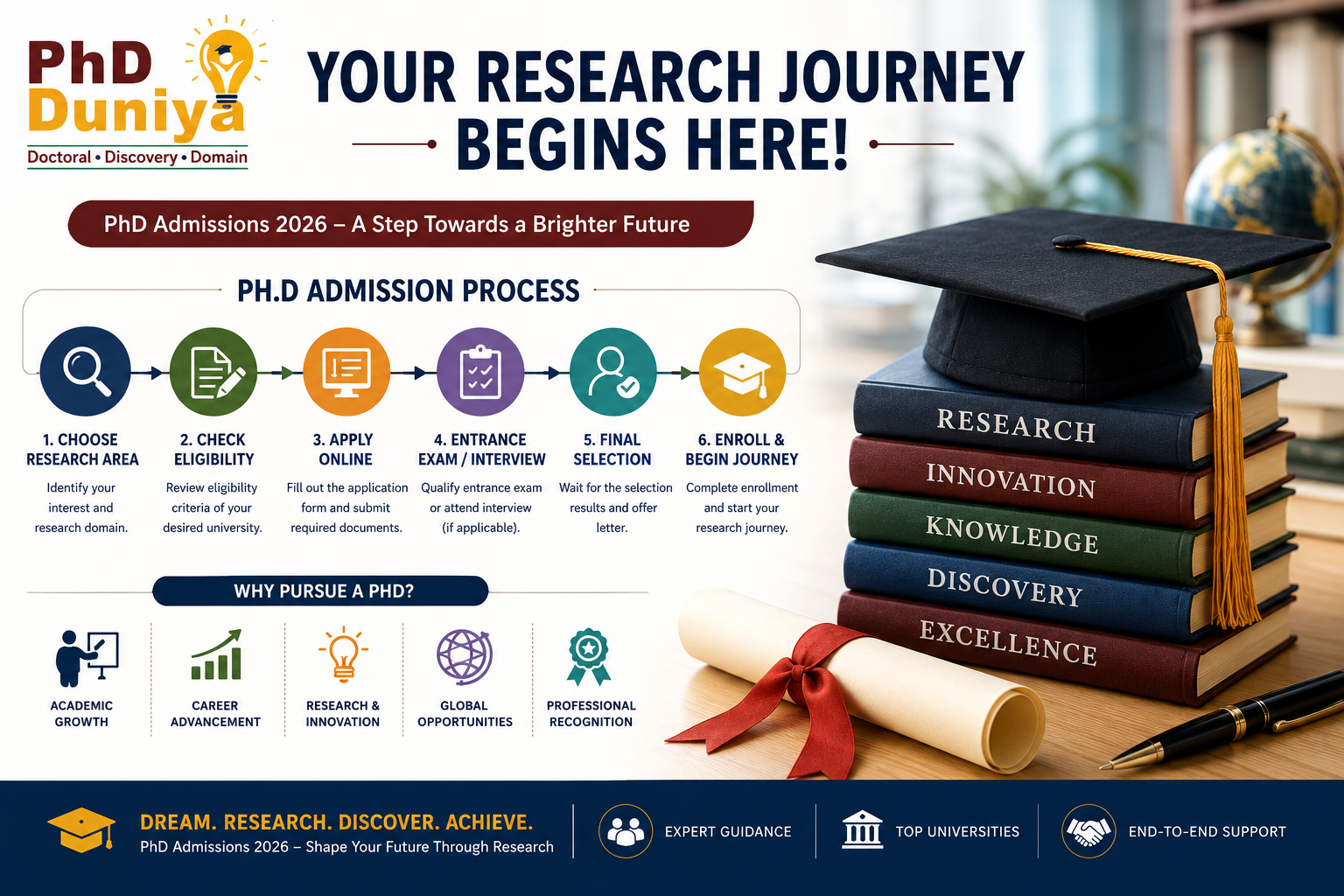
At PhD Duniya, we provide professional academic consultation for aspiring researchers.
Our services include:
Note: PhD Duniya is an academic consultancy. Admission decisions are made solely by the respective universities according to their academic policies and eligibility criteria.
Most universities require a relevant postgraduate degree and fulfillment of the institution's admission requirements.
It depends on the university. Some institutions require entrance examinations, while others consider national eligibility tests or provide exemptions under applicable regulations.
A PhD generally takes 3 to 6 years, depending on the discipline, university regulations, and research progress.
Yes. Many universities offer part-time or flexible doctoral programs for eligible working professionals.
No. PhD Duniya provides academic consultation and admission assistance. Degrees are awarded only by recognized universities in accordance with their academic regulations.
A PhD is a rewarding journey that equips scholars with advanced research skills, specialized knowledge, and opportunities to contribute meaningfully to academia, industry, and society. By selecting the right research area, preparing a strong application, and understanding the admission process, aspiring researchers can take a confident step toward achieving their academic and professional goals.
If you are planning to pursue a PhD, PhD Duniya offers personalized consultation, university selection assistance, documentation support, and end-to-end admission guidance to help you navigate the process successfully.