- Shrikrupa Soc Rees, Khalapur, Panvel-II Raigad Raigarh MH 410206 IN
- gethonoraryphd@gmail.com

Phone Number
+91-8655502244
+91-7893528657
Email Address
gethonoraryphd@gmail.com
+91-8655502244
+91-7893528657
gethonoraryphd@gmail.com



Pursuing a doctorate is one of the biggest academic decisions a student can make, and getting PhD admission in India in 2026 requires more planning than ever before. With UGC-NET, entrance exams, evolving university guidelines, and growing competition for research seats, aspiring scholars need a clear, structured path to follow.
This guide walks you through everything you need to know, from eligibility criteria and entrance exams to choosing a research topic, funding your degree, and submitting a winning application. Whether you're a fresh postgraduate or a working professional planning a career shift into academia or research, this roadmap will help you navigate the process with confidence.

Why PhD Admission in India Is Becoming More Competitive
India has seen a sharp rise in the number of students applying for PhD programs, driven by growing research funding, the push toward NEP 2020 reforms, and increasing global recognition of Indian universities. As more institutes tighten their eligibility norms and introduce entrance-based selection, understanding the process for PhD admission in India has never been more important.
Some key trends shaping 2026 admissions include:
Step 1: Check Your Eligibility
Before applying, confirm you meet the basic academic requirements. While specific criteria vary by university, most institutions expect:
Route | Requirement | Best For |
UGC-NET/JRF | Qualify NET with JRF | Students seeking a fellowship |
University Entrance Test | Clear the institute's own PhD entrance exam. | Direct university applicants |
CSIR-UGC NET | For science stream candidates | Science & research aspirants |
GATE (for engineering) | Valid GATE score | Engineering & technology PhDs |
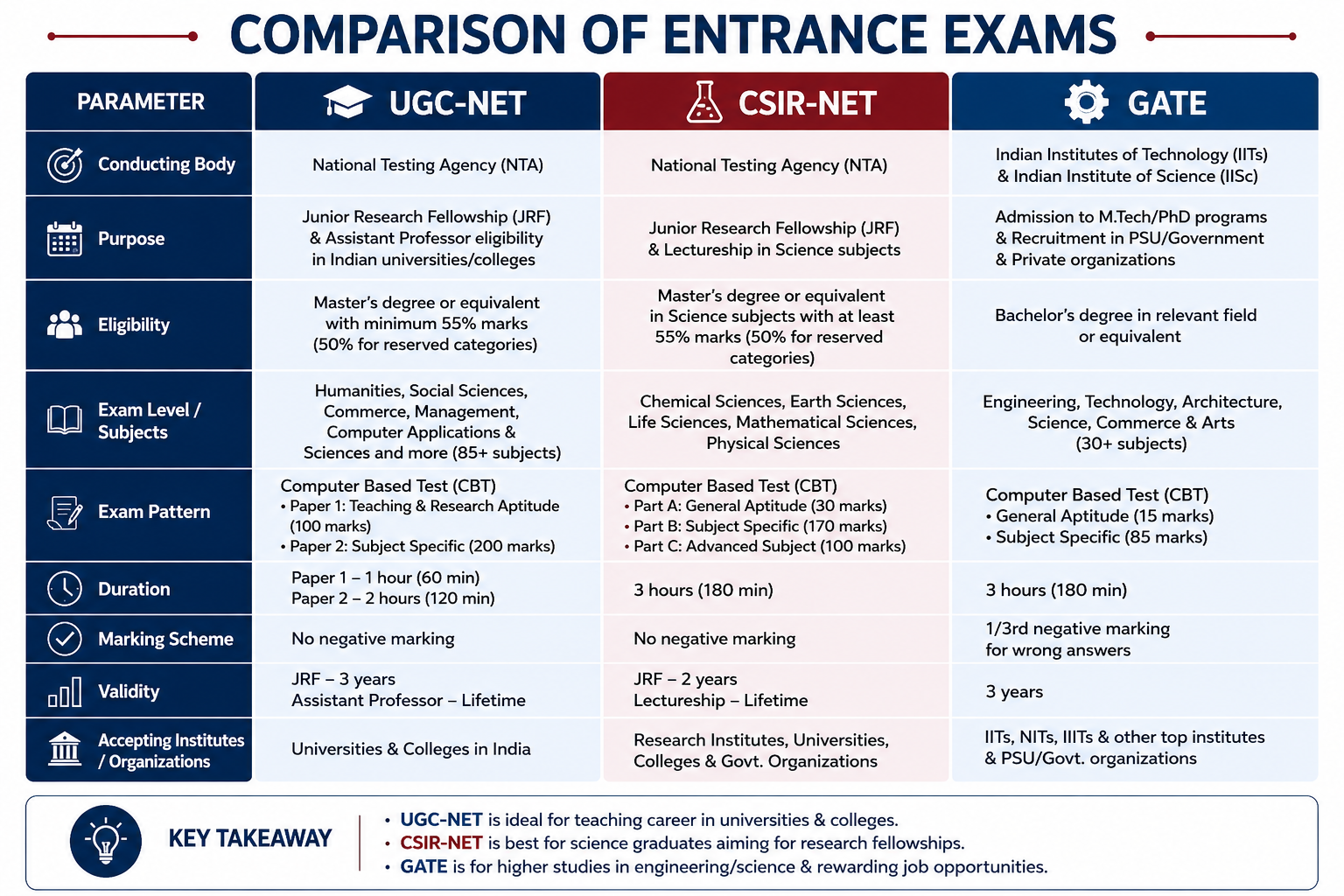
Step 2: Choose the Right Entrance Exam
Most routes to PhD admission in India go through a national or institutional entrance exam. Some of the most recognized exams include
Research each university's exam calendar early, as many institutes conduct their PhD entrance tests only once or twice a year.
Step 3: Shortlist Universities and Research Areas
Choosing the right university and supervisor is just as important as clearing the entrance exam. Consider:
Many students preparing for PhD admissions in India also refer to specialized guidance platforms. PhDuniya is one such resource many candidates use to compare universities, track application deadlines, and understand entrance exam patterns.
Step 4: Prepare a Strong Research Proposal
Most universities require a Statement of Purpose (SOP) or a detailed research proposal at the time of application or interview. A strong proposal should include:
A well-written proposal significantly improves your chances during the interview round, which is a mandatory stage in most PhD admission processes.
Step 5: Apply for Fellowships and Funding
Funding is a major consideration for PhD scholars. Common financial support options in India include:
Apply for these fellowships early, as many have separate deadlines from the university admission cycle.
Step 6: Submit Applications and Attend Interviews
Once you've qualified for the relevant entrance exam, the next steps typically include:
Interview panels often assess subject knowledge, clarity of research interest, and communication skills, so preparation beyond just the entrance exam is essential.
Timeline for PhD Admission in India 2026
Month | Activity |
Jan–Feb | UGC-NET/CSIR-NET registration and exam |
Mar–May | University entrance exam applications open. |
Jun–Jul | Entrance exams and result announcements |
Aug–Sep | Interviews and document verification |
Oct–Nov | Final admission and fellowship confirmation |
Dec | Semesters begin at most universities |
Note: Exact dates vary by university and exam body each year; always confirm on the official website.
Common Mistakes to Avoid
Securing PhD admission in India in 2026 takes careful planning from clearing the right entrance exam to choosing a supervisor, preparing a strong research proposal, and applying for fellowships on time. By following this roadmap step by step, you can move through the admission process with clarity and confidence.
Start early, stay organized, and keep track of deadlines across universities and fellowship bodies so you don't miss your chance to begin your research journey this year.
Frequently Asked Questions
1. What is the eligibility for PhD admission in India in 2026?
Generally, a master's degree with at least 55% marks (50% for reserved categories) along with a qualifying entrance exam like UGC-NET, CSIR-NET, or a university-level test.
2. Is UGC-NET mandatory for PhD admission?
Not always. Many universities conduct their own entrance exams, but qualifying UGC-NET/JRF often makes you eligible for a fellowship and, at some universities, exempts you from the institute's entrance test.
3. How long does a PhD take to complete in India?
Most PhD programs take between 3 and 6 years, depending on the field of study and research progress.
4. Can working professionals apply for a PhD in India?
Yes, many universities offer part-time or executive PhD programs designed for working professionals.
5. What is JRF, and how does it help PhD scholars?
Junior Research Fellowship (JRF) is a monthly stipend awarded to NET-qualified candidates pursuing research, helping cover living and research expenses.
6. Which entrance exam should I take for a PhD in engineering?
GATE is the most widely accepted exam for PhD admission in engineering and technology disciplines at IITs, NITs, and other technical institutes.
 by PhD Duniya