- Shrikrupa Soc Rees, Khalapur, Panvel-II Raigad Raigarh MH 410206 IN
- gethonoraryphd@gmail.com

Phone Number
+91-8655502244
+91-7893528657
Email Address
gethonoraryphd@gmail.com
+91-8655502244
+91-7893528657
gethonoraryphd@gmail.com


 by PhD Duniya
A Doctorate of Business Administration (DBA) is one of the most respected qualifications for senior professionals who want to combine advanced research with real-world business impact. But the application process, from choosing the right university to preparing a strong research proposal, can be confusing without the right support.
This is where a DBA admission consultant becomes valuable: someone who understands the process end to end and helps you avoid common pitfalls. At PhD Duniya, we've put together this complete guide to walk you through every stage of applying for a DBA so you know exactly what to expect and how to prepare.
What Is a DBA and Who Is It For?
A DBA is a practice-oriented doctoral degree typically pursued by
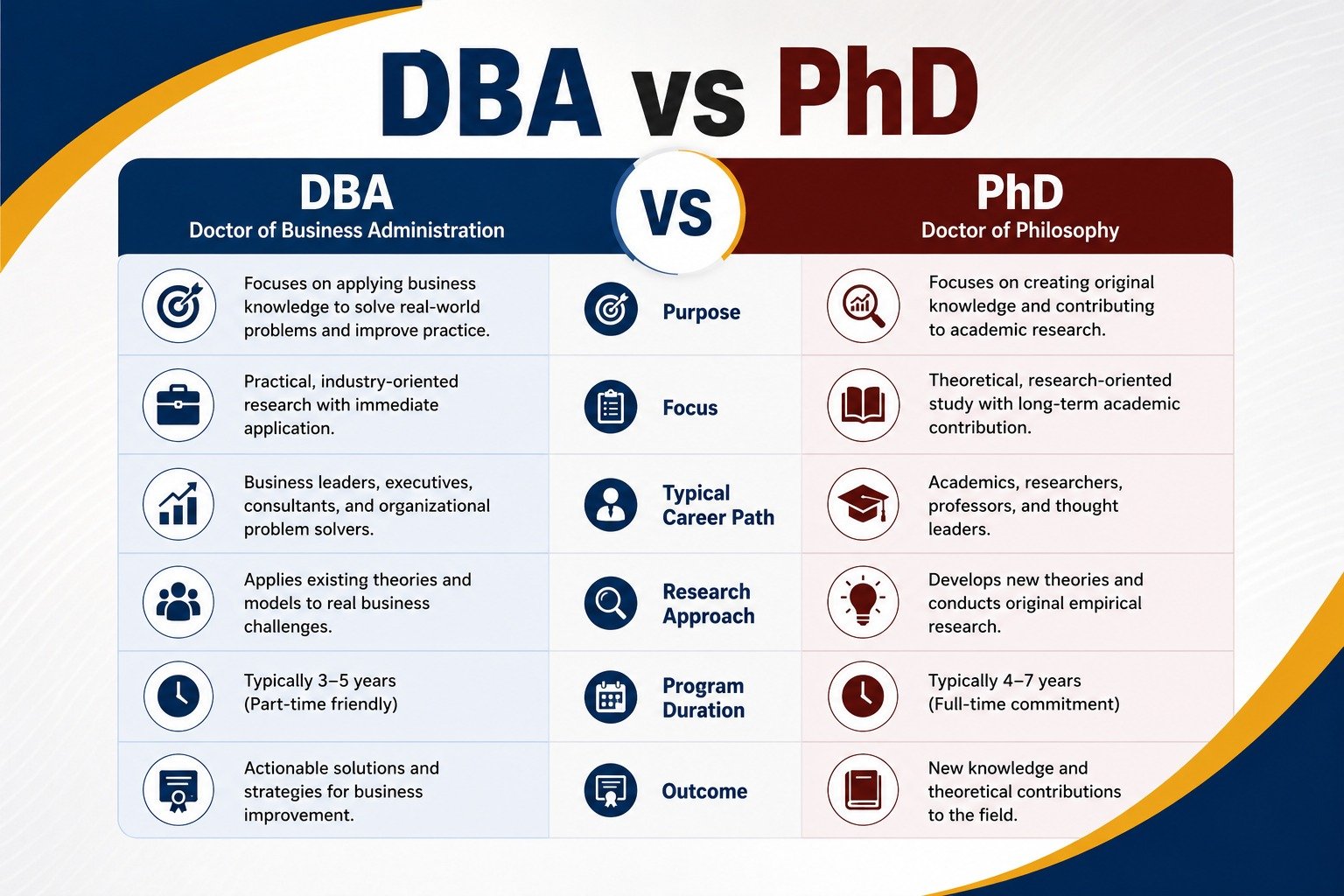
Unlike a traditional PhD, a DBA focuses on solving real business problems through original research, making it ideal for working professionals who want to stay in industry while earning a doctorate. 
Step 1: Understand Eligibility Requirements
Most DBA programs expect:
Eligibility criteria vary significantly between universities, so always confirm requirements on the official program page before applying.
Step 2: Shortlist the Right Universities and Programs
Step 3: Define Your Research Focus
DBA applications are built around applied business research. Before applying, think through:
A clear, well-defined research direction significantly strengthens your application.
Step 4: Prepare Your Application Documents
Document | Purpose |
Statement of Purpose | Explains your motivation, experience, and research direction |
Research Proposal | Outlines the business problem and proposed approach |
Professional CV | Highlights leadership roles and relevant achievements |
Letters of Recommendation | Usually 2–3, from employers or academic references |
Academic Transcripts | Proof of prior qualifications |
English Proficiency Scores | Required for most international programs |
Your Statement of Purpose and research proposal typically carry the most weight in the review process.
Step 5: Prepare for Interviews
Many DBA programs include an interview stage, either with faculty or an admissions panel. Common questions include:
Prepare specific, experience-based answers rather than generic statements.
Step 6: Understand Costs and Funding Options
Common Mistakes Applicants Make
Applying for a doctorate in business administration involves more than meeting eligibility criteria; it requires a clear research focus, strong documentation, and careful planning around cost and time commitment. By following the steps in this guide from PhDDuniya , you'll be well-prepared to put together a strong DBA application and make a confident, informed choice about your doctoral journey.
1. What is the difference between a DBA and a PhD?
A DBA focuses on applied business research and is designed for working professionals, while a PhD is typically more theory-driven and academia-focused.
2. How many years of work experience do I need for a DBA?
Most programs expect at least 5 years of relevant professional or managerial experience, though this varies by university.
3. Do I need a GMAT score to apply?
Some programs require it; others waive it for applicants with significant work experience. Always check the specific program.
4. Can I pursue a DBA while working full-time?
Yes, most DBA programs are designed for working professionals, often through part-time or executive formats.
5. How long does a DBA typically take to complete?
Most DBA programs take 3–5 years, depending on the format and pace of study.